
Nurses care for people affected by violence, trauma, and abuse while collecting medical evidence for legal investigations. To become one, you’ll start by earning a nursing degree, pass the NCLEX-RN, gain clinical experience, and complete specialized forensic training such as SANE coursework. Certifications and experience can expand your opportunities.
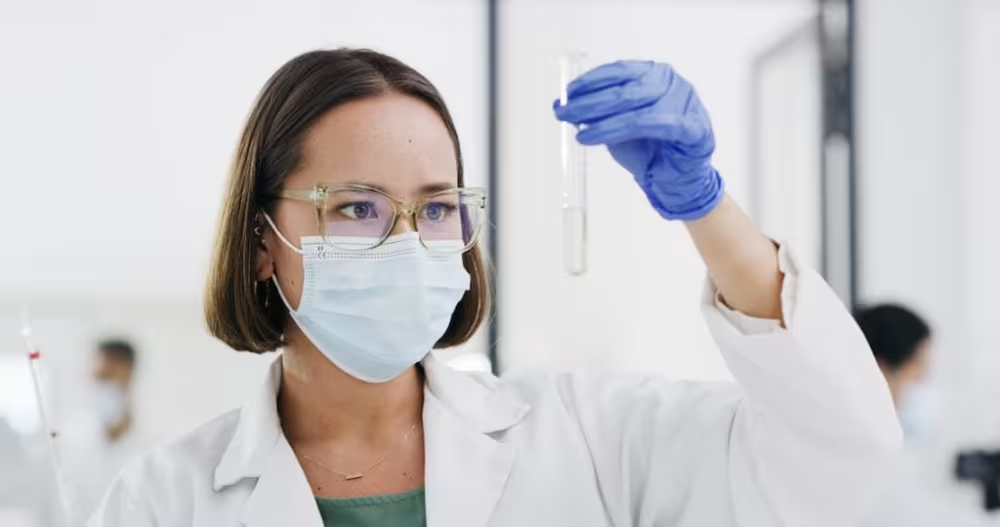
How to Become a Forensic Nurse: Everything You Need to Know
Forensic nursing blends healthcare, science, and the justice system, giving nurses the opportunity to care for people affected by violence while helping ensure accurate legal outcomes. If you want a nursing career that makes a difference and you already have a non-nursing degree or college credits, an Accelerated Bachelor of Science in Nursing (ABSN) program can help you get started sooner.
This guide explains how to become a forensic nurse by explaining what one does, necessary training, certifications you may need, how long the process takes, and what you can expect in terms of salary and job growth.
What Is a Forensic Nurse?
A forensic nurse is a registered nurse (RN) trained to care for survivors of violence, trauma, and abuse while collecting medical evidence that may be used in legal proceedings. Forensic nurses provide trauma-informed medical care, document injuries, collect and preserve evidence and collaborate with law enforcement. They may also testify in court as expert witnesses and support victims through some of the most difficult moments of their lives.
The International Association of Forensic Nurses (IAFN) notes that these nurses often work with survivors of sexual assault, intimate partner violence, child maltreatment, elder abuse, human trafficking, and other intentional injuries. Given the seriousness of the situations their patients are experiencing, forensic nurses need strong assessment skills, emotional resilience, empathy and the ability to manage secondary trauma.
Forensic nurses are needed in settings such as hospitals, medical examiner offices, community anti-violence programs, correctional facilities, psychiatric units, and emergency response environments. Their specialized training helps ensure that both survivors’ medical needs and legal needs are met.
How to Become a Forensic Nurse
Becoming a forensic nurse starts with becoming a registered nurse. If you already hold a non-nursing bachelor’s degree, an Accelerated BSN program may be the fastest way to enter the field. From there, you’ll gain clinical experience and pursue specialized forensic training.

1. Earn a Nursing Degree
The first step in how to become a forensic nurse is to earn a nursing degree, either an Associate Degree in Nursing (ADN) or a Bachelor of Science in Nursing (BSN).
A BSN is recommended because many forensic nursing roles prefer or require a bachelor’s degree. If you have a previous degree or prior college credits, an ABSN program can help you earn your BSN in 12 months to 24 months. ABSN programs typically blend online coursework with in-person labs and clinical rotations at local healthcare facilities.
As you choose a program, make sure it’s accredited by the Commission on Collegiate Nursing Education (CCNE) or the Accreditation Commission for Education in Nursing (ACEN).
2. Pass the NCLEX-RN and Earn Licensure
After graduating from nursing school, you must take and pass the NCLEX-RN to become a licensed RN. The exam ensures that new nurses meet national standards for safe practice.
If your school is in a Nurse Licensure Compact state, you may be eligible for a multistate license, which can increase your career flexibility.
3. Gain Clinical Nursing Experience
Most forensic nursing roles require hands-on clinical experience. Forensic nursing organizations like the IAFN and the Academy of Forensic Nursing recommend experience in:
- Critical care
- Emergency nursing
- Medical-surgical nursing
- Pediatrics
- Psychiatric or behavioral health
These environments help nurses develop strong assessment skills, documentation accuracy and experience working with trauma survivors. Some nurses enter forensic roles through formal nurse residency programs, while others build foundational skills before transitioning into forensic-focused positions.
4. Complete Specialized Forensic Nursing Training
Once you have clinical experience, you’ll want to gain specialized training to work directly with victims of violence. Many forensic nurses begin as Sexual Assault Nurse Examiners (SANEs).
According to the IAFN and Sigma’s Sexual Assault Nurse Examiner (SANE) program, training typically includes:
- At least 40 hours of classroom learning
- About 40 hours of supervised clinical practice
- Evidence collection procedures
- Forensic photography
- Legal considerations and courtroom testimony
- Medical forensic history-taking
- Strangulation assessment
- Trauma-informed communication
These programs prepare nurses to perform comprehensive medical forensic exams and collaborate across healthcare, law enforcement and judicial systems.
After gaining experience and completing specialized training, you might pursue roles such as:
- Correctional facility forensic nurse
- Forensic nurse in a hospital-based forensic program
- Forensic nurse specialist in child, elder, or domestic violence
- Forensic psychiatric nurse
- Nurse coroner or medicolegal death investigator
- Sexual Assault Nurse Examiner
Settings and schedules vary widely, and many nurses change roles over time as their interests evolve.
Certifications for Forensic Nurses
Certification is not required for all forensic nursing roles, but it can strengthen your credentials and expand your opportunities. The IAFN notes that certified nurses often demonstrate higher competency and contribute to improved patient outcomes.
Certifications include:
- Sexual Assault Nurse Examiner Certifications: SANE-A, Adult/adolescent focus or SANE-P, Pediatric focus
- Medicolegal Death Investigator Certification: for nurses in death investigation, certification through the American Board of Medicolegal Death Investigators

How Long Does It Take to Become a Forensic Nurse?
Your timeline to become a forensic nurse will depend on your educational background and the route you take.
A traditional nursing degree typically takes four years to complete. ABSN programs, however, enable eligible students to graduate in as few as 12 months to two years, depending on the school.
Upon graduation, you must prepare for, sit for and pass the NCLEX-RN before you can become licensed.
Following earning your license, you must spend one to two years gaining clinical experience. Forensic training can take several months, depending on the required coursework.
Forensic Nurse Salary and Career Outlook
The U.S. Bureau of Labor Statistics (BLS) does not list an annual median wage for forensic nurses specifically, but the median salary for registered nurses overall was $93,600 as of May 2024.
The job outlook for forensic nurses is strong. The BLS projects 5% growth for RNs from 2024 to 2034. As healthcare systems, legal systems, and community organizations continue to respond to violence and trauma, the need for skilled forensic nurses will remain high.
Start Your Forensic Nursing Journey Today
Forensic nursing offers a meaningful career for nurses who want to combine compassionate care with legal and investigative expertise. If you already have a bachelor’s degree and want to transition into nursing sooner, an Accelerated BSN program can help you earn your degree and begin your path toward forensic nursing.
Fill out the form on this page to connect with nursing programs that can help you take the next step toward this impactful career.
